

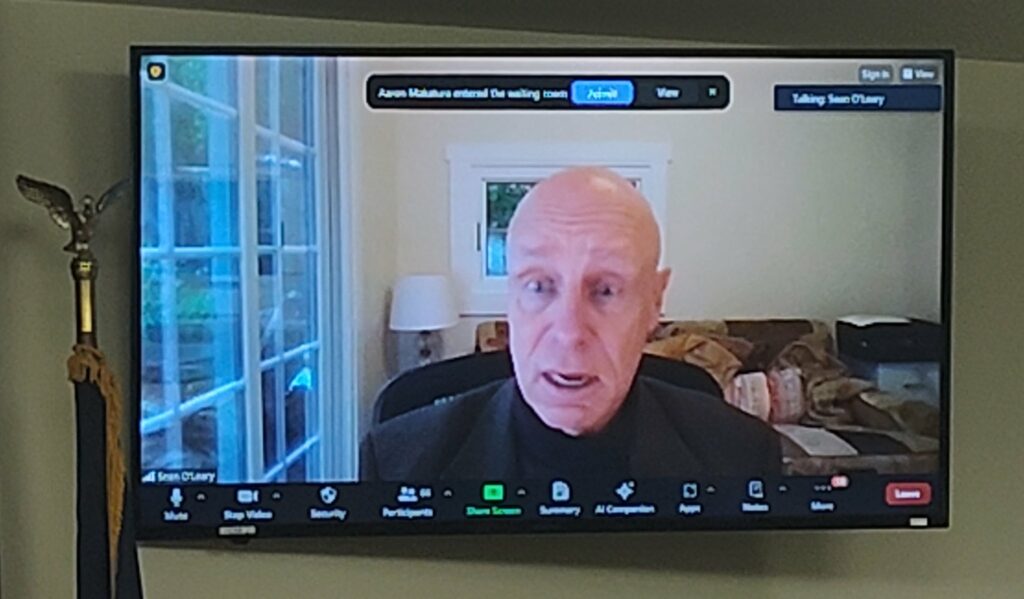
Financial and regulatory support for the gas-based ARCH2 Appalachian Hydrogen Hub risks reduced economic growth, fewer jobs, and higher utility bills, taxes, and prices for Pennsylvanians, according to testimony delivered today at the Pennsylvania Senate Democratic Policy Committee’s hearing on hydrogen infrastructure by Ohio River Valley Institute Senior Researcher Sean O’Leary.
Hydrogen and companion carbon capture and sequestration (CCS) technology are exorbitantly expensive and relatively ineffective means of decarbonization, research shows, and undue state support for their development may result in stranded assets, wasted public funds, and minimal economic and job growth.
“For these reasons, the greatest risk facing you as Pennsylvania policymakers isn’t that you may provide too little support for the state’s hydrogen hubs but rather that you may provide too much,” O’Leary explained to the Pennsylvania Senate Democratic Policy Committee. “That is why we at the Ohio River Valley Institute hope members of this committee will help temper financial and regulatory support for the hubs to reflect their actual value and costs. We hope that members will work to ensure that state assistance is limited to the small number of projects and specific applications in which hydrogen is either the most cost-effective or only means of decarbonization. And we hope that, when hydrogen is used, it will be hydrogen made from water and not natural gas, which is both polluting and economically counterproductive.”
Pennsylvania decision-makers can take immediate action to curb carbon emissions with cheaper, more effective decarbonization models. The Clean Energy Pathway for Southwestern Pennsylvania describes how concerted investment in energy efficiency and distributed renewable generation in the ten counties surrounding Pittsburgh would cut power sector carbon emissions by 92% by 2035, all at a total cost 13% less than decarbonization models reliant on natural gas and carbon capture. The Clean Energy Pathway would additionally support the creation of 12,416 jobs and yield annual environmental and health benefits of more than $2.5 billion by 2035 via efficiency expenditures and residential bill savings.