

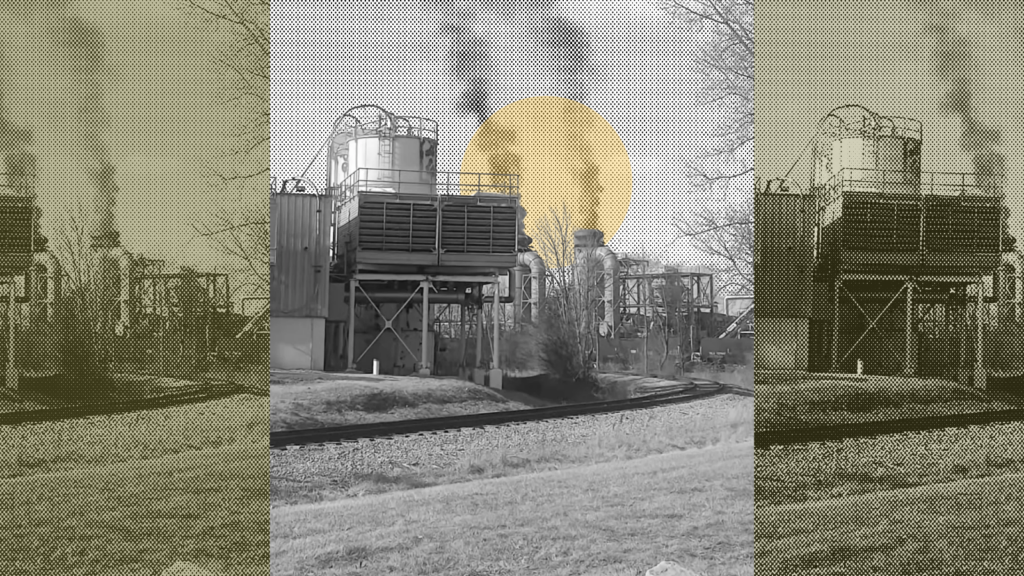
The world is drowning in plastic waste, and the need for action is clear. While the petrochemical industry touts practices like pyrolysis (or “chemical recycling”) as a solution, in reality, the process creates more toxic waste and harmful emissions. Such a facility in Hebron, OH claimed to process plastic waste. But after less than one year of operations, the facility lost its recycling status and suspended operations when the Ohio Environmental Protection Agency (OH EPA) found that the majority of the waste plastic processed at Freepoint was burned, resulting in toxic air emissions.
Pyrolysis is a far cry from traditional mechanical recycling, which physically washes, crushes, shreds, and melts down sorted plastic waste without fundamentally changing its chemical composition. Pyrolysis instead uses extreme heat and chemicals to break down plastic polymer chains, primarily to make more fuels and gasses to burn, creating toxic waste and dangerous air pollution in the process. A 2024 ProPublica investigation found that conventional pyrolysis processes convert just 15% to 20% of plastic waste into propylene and ethylene, which can be used to make recycled plastic products.
Federal law regulates the performance standards and emissions limits from these types of facilities. At the national level, pyrolysis facilities are regulated under Section 129 of the Clean Air Act, which places strict pollution controls on solid waste incinerators. But recent attempts to weaken regulations of this highly polluting industry reclassify pyrolysis as manufacturing, exempting these facilities from critical air pollution limits. Since 2021, 24 states have passed legislation reclassifying plastics pyrolysis as manufacturing.
Beyond environmental impact, pyrolysis and similar projects face structural financial barriers and persistent instability while delivering minimal, if any, public benefit. Many facilities have struggled to secure financing, delayed operations, or failed altogether. ORVI research has reviewed the dubious mechanics, immature technologies, and undeveloped supply chains behind these projects, and found that the economics of pyrolysis appear insurmountable without significant public subsidy.
Freepoint Eco-Systems’ plastics pyrolysis facility located in Hebron, Ohio is one example of the industry’s structural financial challenges. It was one of only ten operational “chemical recycling” facilities in the United States before it ceased operations within a year of its launch. Freepoint Eco-Systems also received financial support from the Israel-U.S. Binational Industrial Research and Development Foundation for a pilot project at the Freepoint Hebron location which has yet to materialize.
Producing the first batch of py-oil (a blend of naphtha, diesel, and gas oil) in April 2025, Freepoint Hebron claimed their product would be refined in Norco, Louisiana, in the heart of Louisiana’s “Cancer Alley,” where residents suffer the most extreme impacts of air pollution from petrochemical development. The refined feedstock would then be shipped to Shell Polymers Monaca in Beaver County, PA to be used as a building block for new plastics. Shell Polymers Monaca facility has been a bad bet for Pennsylvania since the state initially provided millions of public dollars in subsidies.
The company claimed that once the facility was complete, it would process up to 90,000 tons of plastics per year. But that never came to fruition.
The facility experienced multiple operational shutdowns in less than one year of operations.
- On November 4, 2025, Freepoint received a violation notice from the Ohio EPA that cited 79 instances when the facility’s emissions vented to the flare without passing the required pollution controls.
- As part of an April 28, 2026 notice from the Ohio EPA to Freepoint Eco-Systems, the EPA gave Freepoint until the end of May 2026 to submit a compliance plan explaining how the facility would meet the requirements for recycling exemption.
- On May 28, 2026, Freepoint Eco-Systems notified the Ohio EPA that it would suspend “chemical recycling” operations. This announcement followed five Notices of Violations already issued by the Ohio EPA and active pursuance of enforcement orders to address ongoing and unresolved violations at the facility.
Meanwhile, Freepoint’s plastics incinerator in Hebron had been polluting surrounding communities for over a year with hazardous air emissions. Freepoint’s air permit allowed each of its two pyrolysis units to combust up to 132 tons of waste per day, including high density polyethylene, polyvinyl chloride, polypropylene, and polystyrene. Burning these plastics releases carcinogens, hydrochloric acid, and other toxic chemicals. Freepoint claimed they would divert up to 90,000 tons of plastic waste each year, but ended up incinerating too much plastic to qualify for recycler status. So in reality, the facility was burning a majority of their plastic feedstock.
Inside of the plant, employees reportedly experienced hazardous working conditions, including suspected benzene exposures, and developed persistent health issues. Ninety-two of those employees have been laid off without severance pay. Many are now seeking compensation, reimbursement for independent medical testing, and lifetime health monitoring. People want to know what they were exposed to and how they can protect their health. The community is asking Freepoint to conduct tests of the soil and water with environmental remediation that addresses the plant as an incinerator, not a recycling unit. Workers have expressed feeling betrayed because they took a job thinking it was healthy and that they were doing something good for the environment. But their reality was starkly different, and fraught with risk.
So-called “chemical recycling” is not a silver bullet to the plastic waste problem, and pyrolysis operations have done real harm to the Ohio River Valley. Every dollar invested into our communities needs to go toward things that make life better – like fixing our roads, keeping schools strong, and creating safe, family-sustaining jobs that last.